
Hig’s Moral Education in Violence
The Dog StarsHig repeatedly confronts the gap between compassion and self-defense, learning that every choice leaves a moral cost.
increasing Bearing strength in each event
 decreasing
Bearing strength in each eventdecreasingThe Girl on the Plain
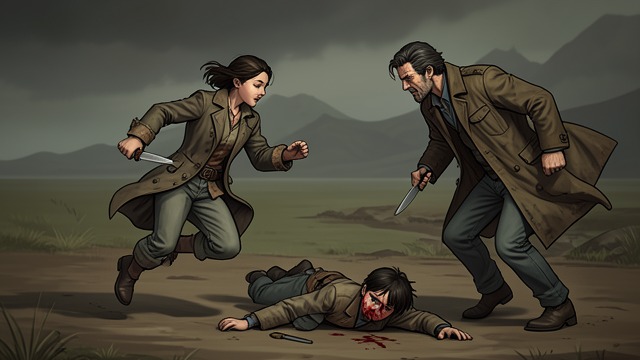
A Killing Hig Cannot Accept
Bangley fires first
Bangley shoots a young girl pursuing Hig across open ground. Hig returns to her and sees her dying, holding a knife that may have been for protection.
The partnership’s moral price
Bangley argues that she might have killed Hig later. Hig cannot make that possibility feel like proof of guilt, and the image remains a challenge to their shared rules.
The Boy in the Cowboy Hat
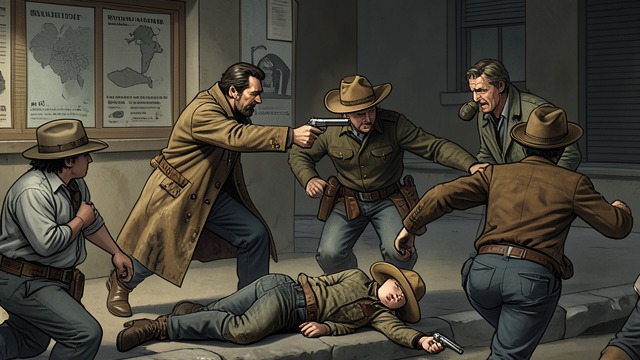
A Child Among Raiders
A shot withheld
Hig prepares to fire at five armed figures, but Bangley kills them first. Among the dead is a boy about nine years old.
Violence without innocence
Bangley calls the boy a threat; Hig sees the child’s short life inside a brutal world. The episode makes the cost of treating every approach as an attack unmistakable.
The Cola Truck
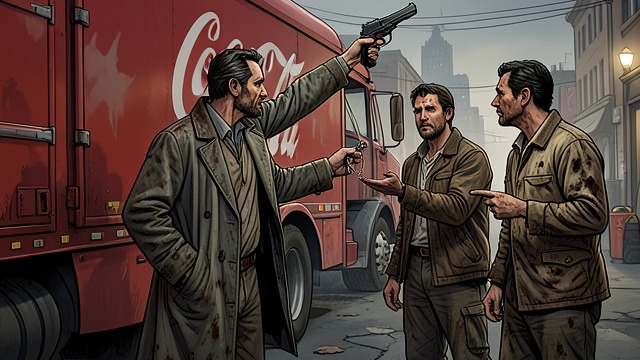
Mercy and Its Limit
A confrontation over supplies
Hig finds armed scavengers at a Coca-Cola semi-trailer. He disarms them and lets two men load drinks rather than killing them immediately.
A sudden reversal
When one man boasts about a necklace made from women’s remains, Hig shoots him. His mercy is real, but it does not make him immune to rage or judgment.
The Valley Ambush
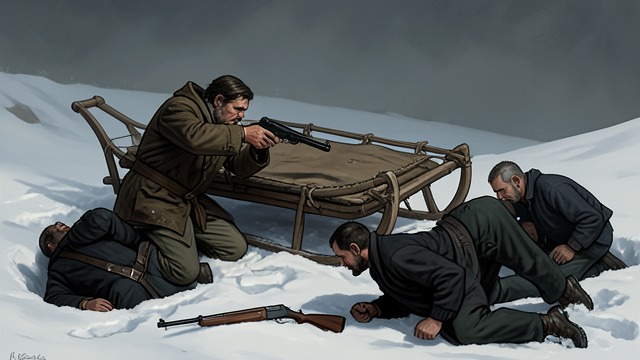
Becoming the Defender
A planned response
Nine raiders stalk Hig for his meat and rifle. With Bangley’s coaching, Hig hides the sled and prepares to shoot from cover.
Competence and shock
Hig kills four raiders before Bangley’s mortar disperses the rest. He has become capable in a fight, but the rescue and its casualties leave him shaken.
A Different Kind of Encounter
Refusing Automatic Hatred
A new standard
Hig’s experiences have not made him harmless or naïve, but they have taught him to distinguish a defended home from a target to eliminate.
A wider circle
He accepts Cima, Pops, and Bangley as people whose lives matter to his own. Protection remains necessary; it no longer has to mean isolation.
During the early years at Erie
During the first nighttime raid after the long lull
Before Hig’s mountain journey
On Hig’s return from the mountains
Near the end, after the tower fight
